A personal origin story — for the workshop, the podcast, and the work
How It Began
We didn’t meet in a grand way. We found each other the way the most meaningful connections often form — quietly, through a side door.
We were introduced through a mutual friend that I had met inside a coaching container. One of those containers where you pay for the promise of transformation, sit through the curriculum, take some notes, and still walk away feeling like something essential was missed. Not because the coach was bad — but because what we were actually hungry for wasn’t more strategy. It was each other.
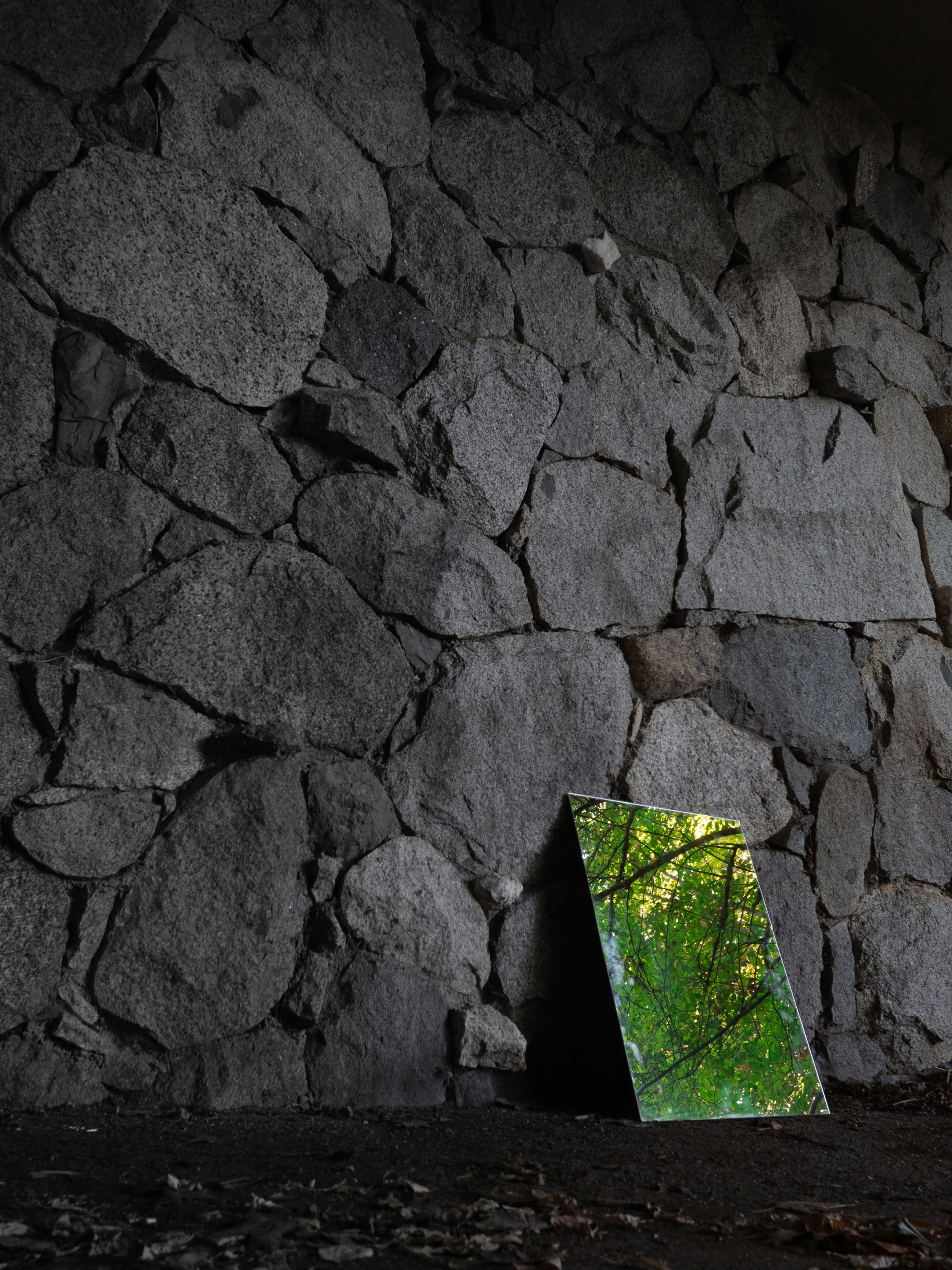
A small group of us started meeting on our own. Three or four women, I don’t remember the exact number now, gathered over Zoom and Telegram with no agenda other than to talk honestly about our businesses, our lives, and all the places they overlapped in ways no coach was addressing. We weren’t looking for another hat-wearing expert to give us a framework. We were looking for mirrors.
That’s where I first really saw Akary.
The Season I Met Her In
I want to be honest about who I was when this relationship began, because the truth of what it taught me only makes sense when you know the full picture of where I was standing.
My father passed away unexpectedly. That kind of grief doesn’t announce itself the way you expect it to. It arrives in the bones, in the nervous system, in the strange fog that settles over your capacity to function. I was moving through it the only way I knew how — by moving. Staying busy. Doing more.
At the same time, I was in an on-again, off-again long distance relationship with a man who was, in the most honest words I can find, narcissistic and emotionally abusive. A pattern I refused to recognize at the time. Not because I was naive, I wasn’t, but because I had learned somewhere along the way that staying in difficult things meant I was strong. That leaving meant I couldn’t handle it. That familiarity, even when it hurts, felt safer than the unknown.
I was running on the energy of someone who had been running for a long time without acknowledging how tired they were.
And then there was Akary — bright, compelling, with something real inside her that I wanted to be in proximity to. I saw potential in her before I even fully understood what I was seeing.
The Spark and the Spiral
When the group slowly disbanded, as these things do, Akary and I kept in touch. Something continued pulling us together, a kind of gravitational force that neither of us questioned much. We began working together informally at first. Tuesdays became our anchor. We’d co-work for hours — what was supposed to be a few focused hours often stretched far beyond, both of us so in the flow that we’d lose track of time entirely. Then Fridays to close out the week’s projects — or add more to them (that was all me).
At some point, she said she wanted to be partners. She wanted to build a platform together.
And something in me lit up.
I am a builder. I see what something could be before it exists. I move fast, think in systems and creative visions, and when I care about someone, I pour myself into their vision like it is my own. That is a gift. It is also, I would later learn, where my shadow lives.
I began building out her programs. Hired a VA to support her assets. Found podcast opportunities. Connected her with article publication leads, leads she submitted using my name. I was genuinely excited for her. I wanted to see her visible, seen, successful. I wanted to be part of that.
But I was building her business instead of mine.
I didn’t name that for a long time. I just kept moving, kept pushing, kept solving the next problem, kept being the answer to every challenge that arose. That’s what I do. And here’s the shadow truth inside that: I could do her work because doing my own felt impossible in ways I didn’t yet have language for.
The Breaking Point
We were moving so fast — three months straight — and I see that now. The pace I operate at is not a pace every nervous system can hold. I forgot to check in with hers. I forgot to check in with mine.
Her launch was approaching and the pressure was building. I had taken such ownership of the execution that I had inadvertently removed her agency from her own process. When I started to feel the first edges of burnout creeping in, my response wasn’t to slow down together and renegotiate — it was to hire someone to cover the gap so the deadline could still be met.
That’s a Controller and Performer showing up at the same time, in case you’re wondering.
Then the resentment hit. Not at her — not really. At myself. At the familiar story of “I’ll do for you what I can’t do for me.” At the exhaustion of having given so completely and so quickly that I had nothing left to stand on.
I withdrew. Not gracefully, not with a clean conversation — I withdrew in the way a dysregulated nervous system withdraws. Fast, total, and without full awareness of what I was leaving behind. I didn’t intend to leave her high and dry right before her launch. But intention and impact are two different things, and the impact was real.
I deleted everything that connected us — the shared Facebook groups she had wanted to promote me in, the reports I had created for her across platforms, all of it. Except a few things kept coming through, as if by design. Like a beacon refusing to go dark. I couldn’t look at the evidence of what I had built for someone else without feeling the weight of what I hadn’t built for myself. If I’m being fully honest — and this story only works if I am — I was jealous and resentful. Not of her, but of the visibility I had helped create for someone else while I sat, unseen, in the work I couldn’t bring myself to do for me.
I recognized this feeling from before Akary. It had lived in a previous relationship, a previous partnership, a previous version of the same story. And when I finally sat with it — really sat with it — everything landed at once. The patterns. The situation I had found myself in. I had been here before, more than once. Luckily, my time in WEL-Systems intensives had taught me something about what it means to truly see yourself, to stay with what’s uncomfortable instead of running from it. That practice became its own kind of medicine in that season.
The Separation, the Depression, and the Invoice
We didn’t speak for months. I thought it was over. I believed that I had burned something down that mattered to me, and that this was the consequence of being who I am. Rapid. Intense. Too much. A familiar story.
What I didn’t expect was the depression that followed. Not the productive kind of sadness that moves through you. The kind that parks. Two weeks where I couldn’t touch any of my own work. Where every project I had put on hold to help her felt impossible to open. Where the familiar truth sat heavy and unavoidable: I can do everything for everyone else and nothing for myself.
That is not a motivation problem. That is a nervous system problem. That is a fawn and flight response dressed up as generosity.
Then there was an invoice.
I had been holding it for months — hesitating to send it, afraid of what it would mean to ask for something, afraid of reopening what I believed was closed. But something shifted. Maybe it was the clarity that comes after you’ve sat with the truth long enough. I sent it.
She responded.
We talked. And in that conversation, something that I thought was broken turned out to be — waiting. We repaired. We renegotiated. We sat with the rupture long enough to understand what it had actually been trying to show each of us.
What the Mirror Was Trying to Show Me All Along
This is the part that changed everything.
Not the falling out. Not even the repair — as beautiful as that was. What changed everything was what I saw when I stopped running from it.
I saw a business I had built from scarcity and need. Not from vision — from survival. I saw why the income rollercoastered. I saw why I would make so much money and then find myself back at zero, rebuilding from scratch. I saw why friendships and partnerships either broke or walked away — whether it was others leaving or me initiating the exit. I saw why I felt physically sick trying to show up on social media the way the algorithm demands, the always-on 24/7 performance of a life that has to look like growth even when you’re in a fallow season.
My body was not performing resistance. My body was telling the truth.
I had been trying to do business in a way that my whole self — nervous system included — was not designed for. Not because I am broken, but because the model itself is broken for people like me. For people who move in seasons. Who need depth, not velocity. Who co-regulate through real relationship, not manufactured community. Who create from a full body yes, not a deadline and a strategy deck.
I wasn’t failing at business. I was trying to do someone else’s business model with my whole nervous system in revolt. A model I had run successfully for 14+ years — for myself, and for others — that no longer worked for me. Or, honestly, for anyone willing to tell the truth about the cost.
The Framework That Was Always Being Built
Here is the thing about patterns — they don’t announce themselves. You don’t wake up one day and think, “I have been building a new model for how to do business in a body.” You just keep making choices that feel more honest than the last ones. You read something that names what you’ve been living. You find others who are doing it differently — without the hustle framework holding it all together — and you recognize yourself in them, even if their structure can’t scale in the way you know it needs to.
That’s what I was doing for two years before I had a name for it. Watching how some people moved — not on the algorithm’s schedule, not in the coach’s launch timeline, not in anyone else’s rhythm — but in their own. When their body said move, they moved. When it said rest, they rested. And somehow, it worked. Not perfectly. Not always. But sustainably.
I had been building the architecture of this quietly, in the background — on paper, in my thinking, in the experiences I kept returning to. I just didn’t know yet what to call it.
Now I do.
The Embodied Shadow CEO Method™ is not a framework I invented from theory. It is a framework I lived through. The Overgiver archetype isn’t a concept I researched — it’s a pattern I watched run my partnership into the ground while I told myself it was love and generosity. The idea that your business mirrors your nervous system isn’t metaphor to me. It is what I watched happen in real time across a year of one relationship and an entire career of doing the same thing in different configurations.
Akary didn’t just teach me about partnership. She became the mirror that showed me everything I had been building in the dark — my patterns, my capacity, my genuine gifts, and the shadow that had been quietly steering the ship.
We’re still building. Differently now. Slower. With agreements that account for two real human nervous systems instead of two people trying to match an imagined pace.
That is the work.
That is the story.
And if you’ve ever found yourself pouring everything into someone else’s vision because yours felt too dangerous to touch — if you’ve ever felt the pull of working for others as a way to avoid the confrontation of working for yourself — if you’ve ever burned out in someone else’s launch while quietly ignoring the ember of your own…
You already know this story. You’ve been living it too.
The only difference is — now we have a name for what’s been running the show.
And naming it is how we begin to change it.
A Personal Note
There are people who walked this path with me — some beside me, some ahead of me lighting the way, some simply being a witness — and I want to name them.
To Stela Murrizi and the WEL-Systems community: the work you hold cracked something open in me that I didn’t know was waiting. Every intensive, every moment of being truly seen inside that container, gave me the tools to sit with myself when sitting was the only honest option left.
To Akary Busto of Uhkare Mind Body Soul: you became the mirror I didn’t know I needed. Thank you for the rupture and the repair equally. Both were gifts.
To Corinne Kerston, who introduced us — you may not have known what you were setting in motion, but I do.
To Florence Ukpabi, whom I have followed for over a year now and whose work inside the community circle we share continues to push me to think deeper and question more honestly — thank you for modeling a different way of moving.
To my mother, who raised me, has witnessed every version of me, and continues to do so without flinching — you are my longest running proof that real love stays.
And to every woman and man, named and unnamed, who showed up in my life and contributed even a single thread to this tapestry — I feel you in this work. Thank you.
This story is the living origin of The Embodied Shadow CEO Method™ — an evolving framework for entrepreneurs whose business is mirroring their nervous system patterns. A program that is launching soon. If it resonated, stay close.
FAQs
Q: What is the Embodied Shadow CEO Method?
The Embodied Shadow CEO Method™ is a somatic leadership framework for entrepreneurs whose business is mirroring their nervous system patterns. Instead of applying more strategy, it helps leaders identify the shadow archetypes — Overgiver, Performer, Protector, Controller — quietly running their decisions, income cycles, and capacity for visibility.
Q: What does it mean that your business mirrors your nervous system?
When your nervous system carries unresolved patterns — fight, flight, freeze, or fawn — those patterns show up in how you price, market, set boundaries, and handle growth. Burnout, income rollercoasters, and self-sabotage often aren’t strategy problems. They’re regulation problems. Your business is reflecting what your body believes is safe.
Q: What is the Overgiver archetype in business?
The Overgiver leads from over-responsibility for others. In business, this looks like building everyone else’s vision while avoiding your own, undercharging, difficulty setting boundaries, and emotional exhaustion. The shadow truth: doing for others feels safer than doing for yourself. Worth becomes tied to being needed rather than being expressed.
Q: How do nervous system patterns affect business income?
Nervous system dysregulation creates income rollercoasters — cycles of making significant money, then returning to zero — because the body doesn’t feel safe sustaining success. Without a regulated base, expansion triggers protective patterns. Sustainable income grows from an integrated nervous system, not just better strategy or more consistent marketing effort.




0 Comments