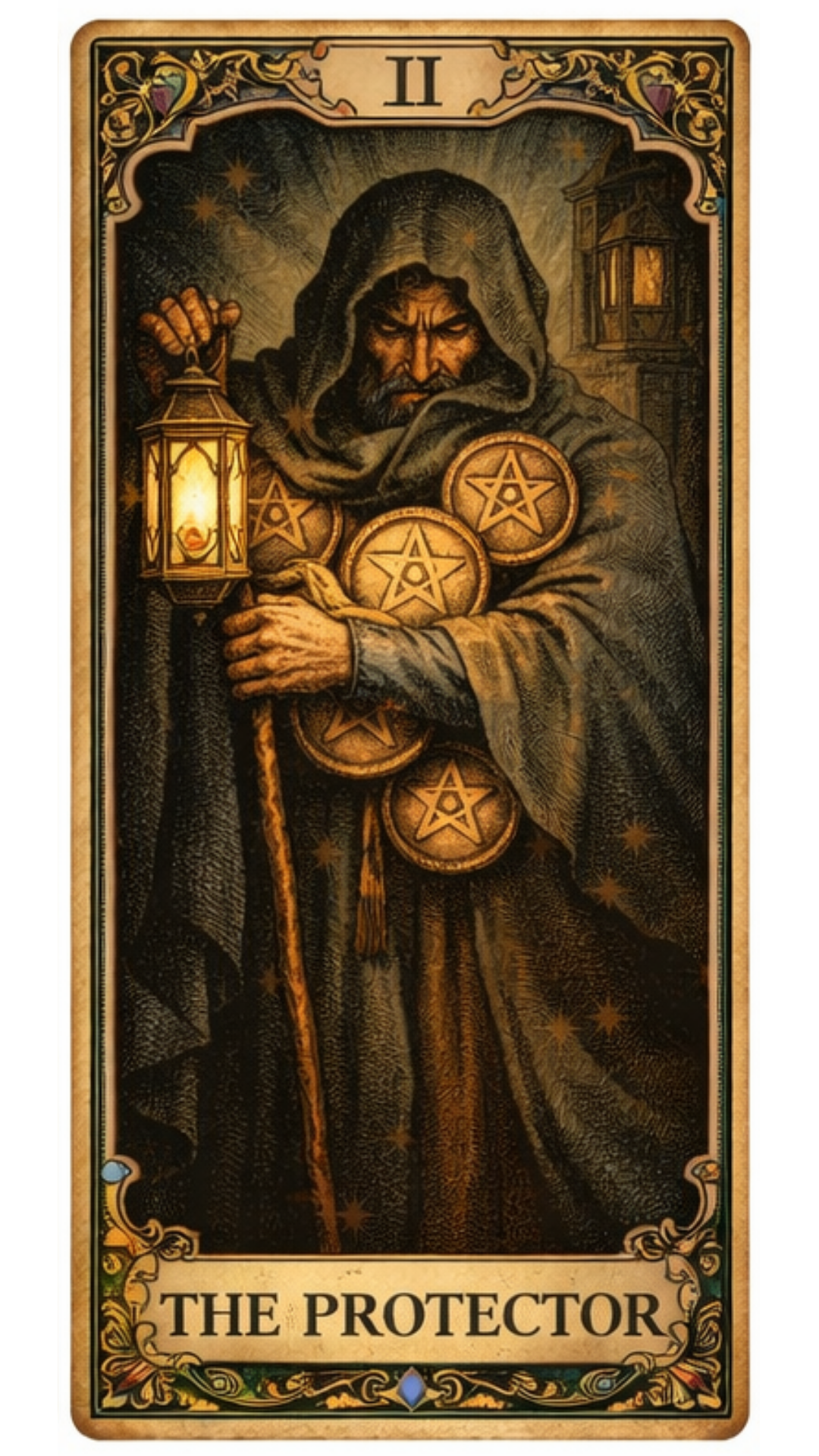
Shadow CEO Archetype Series — Part Two
I have been writing for most of my life.
Poetry since I was young enough to know that words could hold what my body couldn’t. Three books started, none of them finished. A published poet who doesn’t often say “I’m a published poet” in rooms where it might actually matter. A writer who, for years, kept her most honest work in journals that no one was ever supposed to read.
I told myself it wasn’t ready. That I needed more time, more refinement, more certainty before I let it out into the world. I told myself the timing wasn’t right. The audience wasn’t built yet. The platform wasn’t established enough to hold it.
These were not lies, exactly. They were the Protector doing what she does best: making hiding look like wisdom.
Because the truth — the one that lived underneath all that reasonable, strategic delay — was simpler and more uncomfortable than any of those explanations.
I was afraid.
Not of failure. Of something quieter and more specific than failure. I was afraid of being seen. Fully. Without the armor of credentials or the buffer of “almost ready.” Afraid of what happens when you step into the light and people can actually reach you — and some of them won’t be kind.
If you’ve spent any amount of time in preparation mode while your real work waits in a document you’ve refined seventeen times and still haven’t published — you’ve met your Shadow CEO.
Her name is The Protector.
Who She Is
The Protector is the one in the room who watches before she speaks. Who notices everything. Who has more insight in her silence than most people have in their loudest moments.
She is perceptive in ways that can feel almost supernatural. She reads rooms. She reads people. She knows, often before anyone else does, what’s really happening underneath the surface of a situation.
She has standards. She cares about quality, about integrity, about not putting something into the world that isn’t true or isn’t ready. There is wisdom in her caution.
But the Protector has a problem.
She has confused discernment with hiding. She has learned to dress up fear as preparation. And she has gotten so good at it that even she doesn’t always know which one is running the show.
The Protector is brilliant. And she is invisible in ways she didn’t fully choose. And somewhere underneath all that watching and waiting and refining, she is grieving the version of herself that keeps not showing up.
What She’s Protecting
The Protector’s wound is almost always about safety and exposure.
Somewhere in her history, being seen came with a cost. Maybe it was being too sensitive in a family that didn’t have space for sensitivity. Maybe it was being too smart, too intense, too much — and getting cut down for it. Maybe it was a moment of genuine visibility that went badly: a time she spoke and was dismissed, a time she trusted and was betrayed, a time she let herself be known and felt the full weight of what it costs to be perceived.
The nervous system filed that information. It built a story from it: Visibility is exposure. Exposure is danger. The safest place is slightly out of reach.
So the Protector learned to lead from the edges. To contribute just enough. To be present but not fully legible. To stay in preparation because preparation is a room where you can’t be criticized yet — where the work is still becoming and hasn’t yet had to survive contact with the world.
This is not cowardice. This is intelligence in the service of an old threat that may no longer exist.
The Protector learned that hiding kept her safe. She is simply still doing her job, even though the job description changed a long time ago.
How She Shows Up in Your Personal Life
In your personal life, the Protector is the part of you that holds back a little in every room.
You share, but not the most important thing. You connect, but keep a layer in reserve. You let people close, but not all the way close — because all the way close means they can see the parts of you that you’re not sure are lovable.
You’re probably the friend who knows everyone else’s inner world in detail and shares your own in careful, curated pieces. The one people call perceptive, wise, a good listener. The one who somehow manages to be deeply in relationship with people while remaining, at some level, partially a mystery.
In intimate relationships, the Protector can create a particular kind of loneliness: being physically present while emotionally guarded. Craving depth and pulling back from it at the same time. Wanting to be known and quietly terrified of what knowing would cost.
Somatically, the Protector lives in the throat and chest. A contraction. A subtle tightening when you’re about to say the real thing. An urge to swallow the sentence before it lands, to retreat into something safer, to say the almost-version instead of the actual version.
You might feel it as a freeze when visibility appears suddenly. Or as an instinct to go quiet when the conversation gets close to something true.
How She Runs Your Business
In your business, the Protector is patient, strategic, and invisible in ways that are slowly costing you everything.
She is the reason the program you’ve been building for two years isn’t launched yet. Not because it isn’t ready. It is ready. It’s been ready. But ready means exposed, and exposed means people can reach you with their responses, their rejections, their silence — all of which the Protector has decided in advance will be unbearable.
She’s the reason you show up online inconsistently. Not because you don’t have things to say. You have more to say than most people who are saying it loudly. But the Protector measures the risk of every word before it leaves your body, and sometimes the measurement takes so long that the moment passes.
She’s why you stay in the background of collaborations you should be leading. Why you let others take credit you’ve earned, because claiming it would require you to be undeniably visible. Why you undercharge not just from unworthiness, but because a high price means people will expect more, look more closely, need more from you — and more visibility is exactly what the Protector is trying to prevent.
She’s also why the work you produce privately is often extraordinary. Your journals. Your unsent emails. Your voice memos to yourself. The version of you that creates without an audience is often the most alive version of you — because that version doesn’t have to survive being seen.
The business symptom of the Protector is this: the gap between what you’re capable of and what you’re putting into the world. That gap is not laziness. It is not lack of ambition. It is the distance between your truth and your sense of safety, measured in unlaunched offers and unpublished posts and conversations you almost had.
Where She Came From
I grew up empathic in environments that weren’t built for it.
Feeling everything. Absorbing rooms. Knowing things about people I had no logical way of knowing. That’s a gift, but in the wrong context it’s also a liability — because when you’re that porous to the world, the world’s reactions land hard.
I learned early to manage how much of myself I let out at once. To be present but not fully present. To share my perception while keeping my most vulnerable truths in reserve.
And then I spent fifteen years in male-dominated industries where being too much of any of the things I actually was — too sensitive, too spiritual, too interior — would have been used against me. So I kept those parts of myself separate. Private. Protected.
The Protector was smart. She was necessary. She got me through rooms that would have eaten a different version of me alive.
But she also stayed long after those rooms were behind me. She followed me into my agency, into my coaching work, into the writing I keep saying I’ll finish. She is still, on some level, convinced that the world I’m walking into now is as dangerous as the one she was built to survive.
It isn’t. But she doesn’t know that yet.
The Turning Point
There was a woman in a group I was part of who said something so honest it rearranged something in me.
She said: “I realized the version of me that people actually needed wasn’t the polished version. It was the one I was hiding.”
I didn’t say anything in the group that day. I sat with it. Turned it over. Let it press against the places in me where I knew it was true.
Because I had been operating under an assumption so embedded I’d stopped questioning it: that the work had to be ready before I could let it be seen. That I had to be more certain, more established, more prepared before I could take up the kind of space my work was asking me to take.
What I hadn’t let myself consider was that the waiting was its own kind of message to the world. That every month the books stayed unfinished, every time I didn’t say the real thing in a room where it would have mattered, every time I let someone else carry a conversation I should have been leading — I was telling the world, and telling myself, that what I had to say wasn’t worth the risk.
That recognition didn’t feel like relief. It felt like grief.
Grief for the years I’d spent being brilliant in private. For the rooms I’d been in where I had the insight that could have changed the conversation, and I’d kept it. For the women I’d worked with who needed me to be more fully there, and got a careful version of me instead.
Grief is different from shame. Shame says you are wrong. Grief says something real was lost. The Protector doesn’t need to be shamed. She needs to be understood. And then, slowly, she needs to be given evidence that it’s safe to come out.
The Integration: From Protector to Embodied Presence
Integrating the Protector is not about forcing yourself into big, loud, uncomfortable visibility before your nervous system is ready for it.
That approach doesn’t work. It just teaches your body that visibility is violent — which is exactly what the Protector already believes.
Integration happens in smaller, safer reps. Visibility that is paced, grounded, and embodied. The goal is not to become fearless. The goal is to accumulate enough evidence — in your actual lived experience — that being seen does not destroy you.
In your nervous system: Notice the contraction in your throat before you speak the real thing. Don’t push through it. Breathe into it. Ask it what it’s protecting. Then decide, consciously, whether the protection is still serving you — or whether this is a moment where you can choose something slightly more expansive than hiding.
In your content: Start with one true thing per week. Not the whole truth. Not your most vulnerable, fully exposed truth. Just one thing that is more honest than what you would have said before. A post that doesn’t perform. A caption that doesn’t manage the impression. One sentence that is actually yours.
In your offers and visibility: Price your work to match your actual capacity, not the amount of exposure you can tolerate. These are different numbers, and the Protector has been running your pricing from the second one.
In your relationships: Practice saying the thing you almost said. Not all of it. Just the first sentence. The Protector has learned to edit herself so thoroughly that sometimes the real thing never arrives. Let one small truth leave the room before you’ve made it safe.
A somatic practice to begin: Sit with your hand on your throat. Feel your pulse there. This is the Protector’s home — the place where words get swallowed. Breathe slowly, and ask: What am I not saying right now that wants to be said? You don’t have to say it to anyone. Write it. Let it exist outside your body in some form, even if only in your own journal. Visibility begins with letting yourself be known to yourself.
The Gift Inside This Archetype
When the Protector integrates — when discernment stays and hiding releases — something extraordinary becomes available.
Because the Protector’s gift, fully expressed, is depth. Real depth. The kind that doesn’t perform vulnerability but actually inhabits it. The kind that makes people feel seen in ways they didn’t expect, because you see them in ways they didn’t know they could be seen.
The Protector, integrated, becomes a presence people trust not because of what she performs but because of what she actually is. There’s a quality of realness in her that cuts through everything. Because she’s spent so long watching, she knows what’s true. And when she finally speaks from that knowing, it lands with a weight that polished performance can never reach.
Your writing — the books that are still in progress, the words that live in journals and voice memos — carries something that the world needs. Not when it’s perfect. Now. In whatever form it currently exists.
The people who are waiting for you aren’t waiting for the version of you that’s fully ready. They’re waiting for the version of you that’s willing to show up before it’s safe.
That is the Protector’s integration: not less wisdom, but wisdom that finally comes into the room.
This Is Your Invitation
If you recognized yourself here — in the unfinished books, the seventeen drafts, the things you almost said, the work that lives privately and brilliantly in the background of your life — I want to say something directly to you.
The world is not going to feel safe before you step into it. That’s not how it works. Safety is something your nervous system builds through experience, not before it. Every time you speak the real thing and survive it, every time you let yourself be seen and the sky doesn’t fall — that is evidence your system can use.
You have been waiting for certainty before visibility. What you need is something different: small, embodied, survivable moments of being known. Over and over, until your body learns what your mind already suspects: that you are built for this.
The Embodied Shadow CEO Experience is where we do this work together. We move through the body, through the patterns, through the specific places where the Protector is costing you the life and business you’re actually here to build.
If you’re ready — not ready like polished and certain, but ready like I can’t keep hiding this — the waitlist is open.
The next piece in this series explores The Overgiver — the Shadow CEO archetype driven by belonging, who has learned to love so hard she disappears inside it.
Frequently Asked Questions
What is the Protector archetype and how do I know if it applies to me?
The Protector is one of the Shadow CEO archetypes — a pattern that develops when being seen has felt dangerous or costly at some point in your life. If you have work that’s been “almost ready” for longer than makes sense, find yourself sharing just enough but never the most important thing, or consistently show up in the background of spaces you should be leading — the Protector is likely running your business and your life from behind the scenes.
Is the Protector the same as being introverted or private?
Not exactly. Introversion is a personality trait — it’s about how you process energy. The Protector is a protective pattern — it’s about what your nervous system has decided is safe. Many extroverts carry the Protector archetype, and many introverts don’t. The distinction is whether your privacy feels like a genuine preference or like something that’s costing you. If there’s grief underneath the quietness, that’s the Protector.
Why do I keep “preparing” instead of launching or publishing?
Because preparation is a room where you can’t be criticized yet. The Protector has learned that as long as the work is still becoming, it doesn’t have to survive contact with the world — which means you don’t have to survive the exposure of being seen. This isn’t laziness or lack of ambition. It’s your nervous system doing exactly what it was trained to do: keep you out of the line of fire.
How is hiding dressed up as wisdom different from genuine discernment?
Genuine discernment feels grounded and spacious — it says “not yet” from a place of clarity. The Protector’s version feels more like contraction — a tightening in the throat, a vague anxiety, an endless list of reasons why the timing still isn’t right. One is a conscious choice. The other is a pattern running underneath your conscious reasoning, making fear look like strategy.
Can the Protector archetype affect my relationships as well as my business?
Deeply — and often more quietly than in business. The Protector tends to create intimacy that goes only so far. You may be the person everyone turns to for insight and support while keeping your own inner world carefully curated. You’re present, but not fully legible. Connected, but with something held in reserve. The particular loneliness this creates — being surrounded by people who love you while feeling fundamentally unknown — is one of the Protector’s most invisible costs.
What does integrating the Protector actually look like in practice?
It looks like small, paced, survivable moments of being more visible than you were before. Not a grand leap into full exposure — that approach tends to confirm the Protector’s belief that visibility is violent. Instead, it’s one honest post per week. One sentence that’s more true than what you would have said before. One price that reflects your actual capacity rather than the amount of scrutiny you can tolerate. Integration is evidence-based: your nervous system learns it’s safe by surviving small moments of being seen, over and over, until the evidence outweighs the old story.
Why does my best work stay private — in journals, voice memos, unsent emails?
Because the version of you that creates without an audience doesn’t have to survive being perceived. The Protector doesn’t interfere with private creation — only with the moment before you let it out. That gap between what you produce privately and what you share publicly is one of the clearest signals that the Protector is running your visibility. And it’s also one of the most important things to understand: the work in those journals is not lesser work. It may be your most important work, waiting for you to decide it’s worth the risk.
How is this different from imposter syndrome?
Imposter syndrome is the fear that you’re not qualified enough — that people will discover you don’t actually know what you’re doing. The Protector isn’t about credentials or competence. She often knows exactly how capable she is. Her fear is more specific: that being fully seen — regardless of how qualified she is — will cost her something she can’t afford to lose. It’s less about being found out and more about being reached.





0 Comments