

What My Breakdowns (and Breakthroughs) in Business Taught Me About Capacity
Entrepreneur burnout is one of the most confusing things I’ve ever walked through.
From the outside, it looked like I was “doing everything right”:
I was showing up, serving clients, launching offers, saying yes to opportunities, pushing my growth edge over and over again.
On the inside, it felt like my body was slowly filing a restraining order against my business.
I would hit these seasons where everything looked good on paper — revenue up, projects moving, inbox full — and yet I’d wake up with this heavy dread in my chest. I’d stare at my calendar and feel my whole system quietly whisper: “I can’t keep doing it like this.”
For a long time, I told myself I was just tired or not disciplined enough. But what I was actually living in was burnout.
Why High Performers Are More Prone to Burnout
Entrepreneur burnout is often misunderstood. Most people assume it’s caused by working too much.
But for high performers, the issue is usually deeper.
High‑performing entrepreneurs (like you and me) tend to:
- Push through discomfort because we’re proud of our resilience.
- Override our body’s signals because “the work has to get done.”
- Tie self‑worth to productivity, output, and results.
- Stay in constant “on” mode — mentally, emotionally, energetically.
Those traits absolutely contribute to success. They’re probably part of why you’ve made it as far as you have.
But they also create the perfect storm for exhaustion.
I can’t count how many times I felt the early whispers — the headaches, the irritability, the numbness, the way even simple tasks felt like climbing a mountain — and still told myself, “Just one more push.”
“After this launch, I’ll rest.”
“After this client project, I’ll slow down.”
“After this month, I’ll set better boundaries.”
Those “after this…” moments rarely came.
The Burnout Cycle (That Looks Like “Being On Fire” Until You’re Not)
If you’re wired for high achievement, you might recognize a pattern like this:
- Growth phase – You’re in a big push: launching, rebranding, collaborating, creating. Output is high, energy feels high, and you’re proud of how much you’re holding.
- Pressure builds – You start to feel a subtle tightening: more messages, more to‑dos, more people needing you. You tell yourself it’s just a busy season.
- Nervous system overload – Sleep gets lighter, your brain spins at night, you feel a mix of anxiety and numbness. You’re more reactive, but you keep going.
- Crash or withdrawal – Suddenly, you’re done. You can’t look at your business. You ghost your content, delay projects, or fantasize about burning it all down.
- Recovery – You pull back, rest, maybe question everything. Slowly, your energy returns. You promise yourself you’ll “do it differently next time.”
- Repeat – A new idea hits, a new opportunity arrives, and the cycle starts again… just with higher stakes.
For years, I lived in that loop. I told myself it was just the entrepreneurial rollercoaster.
But that cycle isn’t random. It’s a nervous system regulation issue.
The Nervous System Behind Burnout
Burnout happens when your system is operating under sustained stress without enough regulation.
When you stay in stress states for too long:
- Stress hormones like cortisol stay elevated.
- Your ability to truly recover between pushes decreases.
- Decision fatigue increases, so even small choices feel heavy.
- Emotional regulation decreases — you cry easily, snap quickly, or numb out.
Eventually, your body does what it has to do to protect you.
It forces a reset.
That “I literally can’t anymore” feeling?
That’s your system pulling the emergency brake.
For me, one of those resets happened right in the middle of building with Akary.
On the surface, we were doing exciting things: co‑creating, planning, mapping out an ecosystem that genuinely lit both of us up. But under the surface, my nervous system was already frayed from other responsibilities, unresolved expectations, and an internal story that I had to hold it all together.
I kept overriding the subtle signals — the exhaustion before meetings, the dread before checking messages, the way my creativity felt like it was getting squeezed instead of expanded.
Eventually, everything came to a head. Communication felt off. Tension rose. What looked like a business conflict on the outside was, for me, also a nervous system breaking point.
When we decided to pause working together, it hurt. But my body exhaled in a way I hadn’t realized it needed to. That pause became an invitation to really look at how I was operating — not just in that partnership, but everywhere.
Why “Work Less” Isn’t the Solution
When burnout hits, the most common advice is: “Just take a break.”
And yes — rest matters. Time off matters. Space matters.
But here’s what I learned the hard way:
You can reduce your workload, cancel your launches, and take weeks “off”… and still recreate the exact same burnout pattern when you come back.
Why?
Because if your nervous system stays dysregulated, your relationship to work doesn’t actually change.
You might be doing fewer tasks, but you’re relating to them with the same urgency, self‑pressure, and fear of disappointing people. You’re still tying your worth to output. You’re still sprinting, just on a shorter track.
The solution isn’t just “do less.”
The solution is: operate differently.
That means learning how to stay in relationship with your body while you work — not just collapsing when it finally shuts down.
The Real Solution: Regulation + Capacity
To break burnout cycles, you need two things working together: regulation and capacity.
- Recognize your stress patterns.
Notice how burnout actually begins for you. Is it when you stop feeling anything? When you start resenting everyone? When scrolling becomes easier than creating? Awareness lets you catch the pattern earlier, not just at the crash. - Learn how to regulate under pressure.
This isn’t about creating a perfect, stress‑free business (spoiler: that doesn’t exist). It’s about having tools to bring your system back toward safety while you move through launches, client work, and visibility. Breath, movement, somatic check‑ins, boundaries — these become your non‑negotiables, not your afterthoughts. - Expand your capacity for output without overload.
Capacity work is about slowly increasing what your body can hold without tipping into survival mode. That might mean: lengthening the time you can be visible before you need a reset, adjusting your client load, raising your prices so effort and income match, or designing your schedule around your actual energy patterns.
This is the foundation of sustainable high performance.
Not “how much can I squeeze out of myself?”
But “how can I build a life and business my body can actually live in?”
The Embodied Shadow CEO Perspective
Inside The Embodied Shadow CEO Method™, burnout is not seen as a personal failure.
It’s seen as feedback.
Burnout is your system saying:
“The way you’re operating is no longer sustainable or safe for me.”
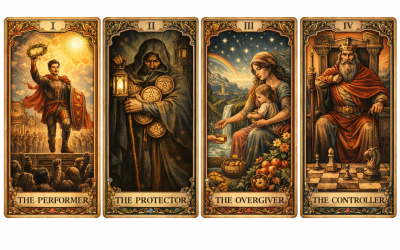
Through this lens, the patterns that lead to burnout — overgiving, over‑controlling, over‑performing, disappearing when overwhelmed — are all expressions of different Shadow CEO parts trying to protect you.
- The Performer keeps pushing so you’ll never be seen as lazy.
- The Protector micromanages and says yes to everything so nothing falls apart.
- The Overgiver keeps pouring into others so you’ll always be needed.
- The Controller tries to hold every detail because chaos once felt dangerous.
When you start working somatically with these parts — instead of shaming them — something shifts:
- You stop cycling between extremes of “I’m on” and “I’m done.”
- You maintain steadier consistency instead of all‑or‑nothing output.
- You design your business around your nervous system, not against it.
Coming back into collaboration with Akary after our pause was a living example of this. We didn’t just jump back into “doing more.” We had conversations about pace, pressure, expectations, and the kind of space we both needed to feel safe and creative.
That wasn’t just emotional maturity; it was nervous system work in real time. Two CEOs choosing to build in a way that didn’t require either of us to burn out to belong.
Final Thoughts
Burnout isn’t just about how much you’re doing.
It’s about how your body is experiencing what you’re doing.
Until that changes, the cycle usually continues — no matter how many vacations you take, planners you buy, or systems you implement.
If you recognize yourself in this, here’s your invitation:
Before you ask, “How can I push through this?”
Try asking, “What is my body trying to tell me about the way I’m working?”
You might discover that your next level of success doesn’t require more force.
It requires a different relationship with your own nervous system.
This work is part of The Embodied Shadow CEO Method™, a somatic leadership framework for entrepreneurs who are ready to build lives and businesses their bodies can actually hold.
FAQs: Entrepreneur Burnout, Capacity, and The Embodied Shadow CEO Method™
1. How do I know if what I’m feeling is burnout and not just “being tired”?
Burnout goes beyond normal fatigue.
If you’re in a season where work looks “good on paper” but you feel chronic dread, emotional numbness, irritability, or the urge to burn everything down, you’re likely in burnout — not just a busy week.
You may notice your sleep gets lighter, your creativity flattens, simple tasks feel like climbing a mountain, and you fantasize about disappearing from your business altogether.
2. Why do high performers seem to burn out more often?
High performers are often proud of their resilience, which means they are also more likely to override their body’s signals in the name of “showing up.”
They tie self‑worth to output, stay in constant “on” mode, and normalize pushing past exhaustion because that’s how they’ve created results in the past.
Those same traits that make them successful also keep their nervous system in prolonged stress states, which sets them up for repeated burnout cycles.
3. What is the burnout cycle you describe, and why does it keep repeating?
The burnout cycle often moves through big growth pushes, rising pressure, nervous system overload, a crash or withdrawal, and then recovery — followed by a new big idea that re‑starts the loop.
It repeats because nothing fundamentally changes in how your body is relating to work; you rest just long enough to “feel better,” then plug back into the same patterns of urgency, over‑responsibility, and over‑commitment.
Without nervous system regulation and capacity work, your business structure may change, but your internal operating system stays the same, so the wall shows up again.
4. What do you mean when you say burnout is a nervous system regulation issue?
Burnout isn’t only about hours worked; it’s about how long your nervous system has been in stress responses without enough recovery or safety.
When stress hormones stay elevated, your body eventually pulls the emergency brake — the “I literally can’t anymore” feeling — to protect you from further overload.
Nervous system regulation is the process of bringing your system back toward safety, so you can work, create, and lead without constantly tipping into survival mode.
5. Why isn’t “just working less” enough to fix burnout?
You can cut your hours, cancel launches, or take a long vacation and still come back into the same urgency, self‑pressure, and people‑pleasing that burned you out in the first place.
If your nervous system and patterns around work don’t change, you simply recreate burnout at a different scale or speed.
The solution is not only fewer tasks; it’s learning to operate differently — in real‑time relationship with your body instead of only listening when it shuts you down.
6. What does “capacity” actually mean in this context?
Capacity is the amount of stress, visibility, responsibility, and emotional load your body can hold while still feeling fundamentally safe and resourced.
Expanding capacity doesn’t mean forcing yourself to tolerate more pain; it means gradually increasing what you can hold without flipping into fight, flight, or freeze.
In business, that might look like adjusting client load, raising prices to match energetic output, or designing your schedule and offers around your real energy rhythms, not your idealized ones.
7. What are some early signs that my capacity is maxed out?
Early signs often show up as subtle irritability, resentment toward clients or your business, emotional numbness, or needing more and more time to “gear up” for simple tasks.
You may notice you’re doom‑scrolling instead of creating, overthinking every decision, or feeling wired but tired at night.
These whispers usually arrive long before the full crash; catching them is part of capacity work.
8. How can I start regulating my nervous system while still running my business?
Start by building small, consistent practices into your actual workday instead of saving them for when you’re already in crisis.
This can include micro‑pauses between calls, somatic check‑ins before big decisions, breath or movement breaks, and clearer boundaries around your availability and communication.
The goal is not to eliminate all stress, but to keep bringing your system back toward safety while you move through launches, client work, and visibility.
9. What is “capacity work” and how is it different from mindset work?
Mindset work focuses on your thoughts; capacity work focuses on what your body can genuinely hold without going into survival mode.
Instead of only reframing beliefs, capacity work asks: “Can my body stay present, grounded, and resourced while I do this?” and then builds that tolerance slowly.
This makes your mindset shifts “stick,” because your nervous system is no longer fighting to protect you from what your brain is trying to convince you is safe.
10. What is The Embodied Shadow CEO Method™?
The Embodied Shadow CEO Method™ is a somatic leadership framework that helps entrepreneurs build businesses their bodies can actually live in.
It treats burnout as feedback, not failure, and works directly with the protective parts of you (like the Performer, Protector, Overgiver, and Controller) that have been running the show.
By engaging these Shadow CEO parts somatically — instead of shaming or suppressing them — you shift from all‑or‑nothing swings into steadier, sustainable leadership.
11. Who are the “Shadow CEO” parts you mention?
The Shadow CEO parts are protective patterns that took charge of your business often long before you realized it.
The Performer pushes so you’re never seen as lazy, the Protector says yes to everything so nothing falls apart, the Overgiver keeps pouring into others to feel needed, and the Controller holds every detail because chaos once felt dangerous.
Each part is trying to keep you safe; the work is to learn how to lead them, instead of letting them run your business from fear.
12. How does somatic work with these Shadow CEO parts actually look in practice?
Somatic work means noticing where each pattern lives in your body — the tight chest before you say no, the clenched jaw when you delegate, the collapse in your posture when you disappoint someone.
From there, you experiment with new micro‑moves: different breathing, posture, boundaries, or pacing that let those parts feel safer while you choose a different response.
Over time, this re‑patterns your default reactions so you can stay present during hard conversations, launches, and decisions without abandoning yourself.
13. Can I still be ambitious and regulated at the same time?
Yes — regulation is not the opposite of ambition; it’s what makes ambition sustainable.
A regulated nervous system lets you take big risks, hold visibility, and move through growth seasons without constantly living in fight‑or‑flight.
You’re still stretching, but you’re not chronically overriding your body or needing a full collapse after every up‑level.
14. What changes when you design a business around your nervous system?
You stop organizing your business around constant urgency and start organizing it around what keeps you grounded, creative, and clear.
That might mean different timelines, more spacious delivery, cleaner boundaries with clients, or more honest conversations with collaborators about pace and pressure.
The result is steadier output, less swinging between “I’m on fire” and “I’m done,” and a business you can actually imagine living inside long‑term.
15. How did your experience with pausing and then rebuilding your collaboration inform this work?
The pause in your collaboration showed how burnout can hide inside even the most aligned partnerships when nervous systems are frayed and expectations go unspoken.
Coming back together required conversations about pace, pressure, and safety — not just strategy and vision — which is somatic leadership in real time.
It became proof that when two leaders honor their bodies’ needs, they can co‑create in ways that don’t require either person to burn out to belong.
16. Where can I start if I see myself in this and want support?
Start by getting curious about your own burnout cycle and the Shadow CEO patterns that show up most often in your business.
From there, you can explore somatic tools, coaching, or programs (like The Embodied Shadow CEO Method™) that help you build regulation and capacity alongside strategy.
The most important step is choosing to believe that your next level of success comes from a different relationship with your body, not from pushing harder. Contact Christina Rae Blackmon at christina@momentivemedia.com for more information.



0 Comments