
Navigating Change: Insights on the Future of AI in Marketing

by | Dec 17, 2025 | Blog | 0 comments

Futuristic marketing team collaborating with AI technology

The Future of AI in Marketing: Trends, Tools, Strategies, and Impact for 2026 and Beyond

Artificial Intelligence in marketing isn’t just a buzzword anymore; it’s the engine driving systems that analyze data, predict customer behavior, generate creative assets, and automate decisions to supercharge acquisition, engagement, and retention. As we stand on the cusp of 2026, groundbreaking advances like agentic AI and hyper-personalization are transforming AI from a collection of cool tools into a continuous, autonomous marketing powerhouse. This article is your practical guide, packed with strategies, tool categories, measurement approaches, and governance practices you can implement *now*. You’ll gain a crystal-clear view of the top AI marketing trends for 2026, the tool types reshaping our workflows, step-by-step strategy guidance for pilots and scaling, the workforce shifts to expect, ethical guardrails to implement, and how to truly measure your AI marketing ROI. Let’s be honest, the biggest challenge for us marketers isn’t just *understanding* AI, it’s turning its incredible potential into real, repeatable business wins. This guide provides actionable steps to bridge data, models, teams, and governance into measurable campaigns. We’ll kick things off by listing the high-impact trends shaping our near future, then dive into tools, strategy frameworks, role impacts, ethics, and ROI measurement to help you craft a cohesive plan you can follow.

What Are the Key AI Marketing Trends Shaping 2026?

AI marketing in 2026 is being shaped by a handful of converging trends that are dramatically increasing autonomy, relevance, and speed across every step of the customer journey.

These aren’t just buzzwords; they’re the game-changers that empower us marketers to shift from broad, batch segmentation to continuous, context-aware decision-making, producing measurable lifts in conversion and lifetime value.

Below is a concise list of the most consequential trends, with short definitions that capture why each matters and what you, as a marketer, should prioritize next.

The top trends marketers absolutely must track include:

  • Agentic AI: Autonomous systems that plan and execute multi-step campaigns with built-in feedback loops for continuous optimization. Think of it as your marketing campaigns running themselves, smarter every day.
  • Hyper-personalization: Real-time tailoring of messages and experiences using your first-party identity and behavioral signals. This is about delivering exactly what your customer needs, precisely when they need it.
  • Multimodal AI Content: Models that create, adapt, and optimize text, audio, image, and video assets for every channel and format imaginable. Your content creation just got a massive upgrade.
  • Real-time Decisioning: Low-latency inference engines that respond to session-level signals to change offers and creative in the blink of an eye. Imagine your website adapting instantly to every visitor.
  • Ethical and Transparent AI: Governance, explainability, and privacy-preserving techniques that aren't just nice-to-haves, but essential for regulatory compliance and, more importantly, building customer trust.

These trends collectively push marketing toward systems that not only suggest actions but also perform and learn, which leads us to the first core technology powering that shift: agentic systems that orchestrate campaigns autonomously.

How Is Agentic AI Transforming Autonomous Marketing Campaigns?
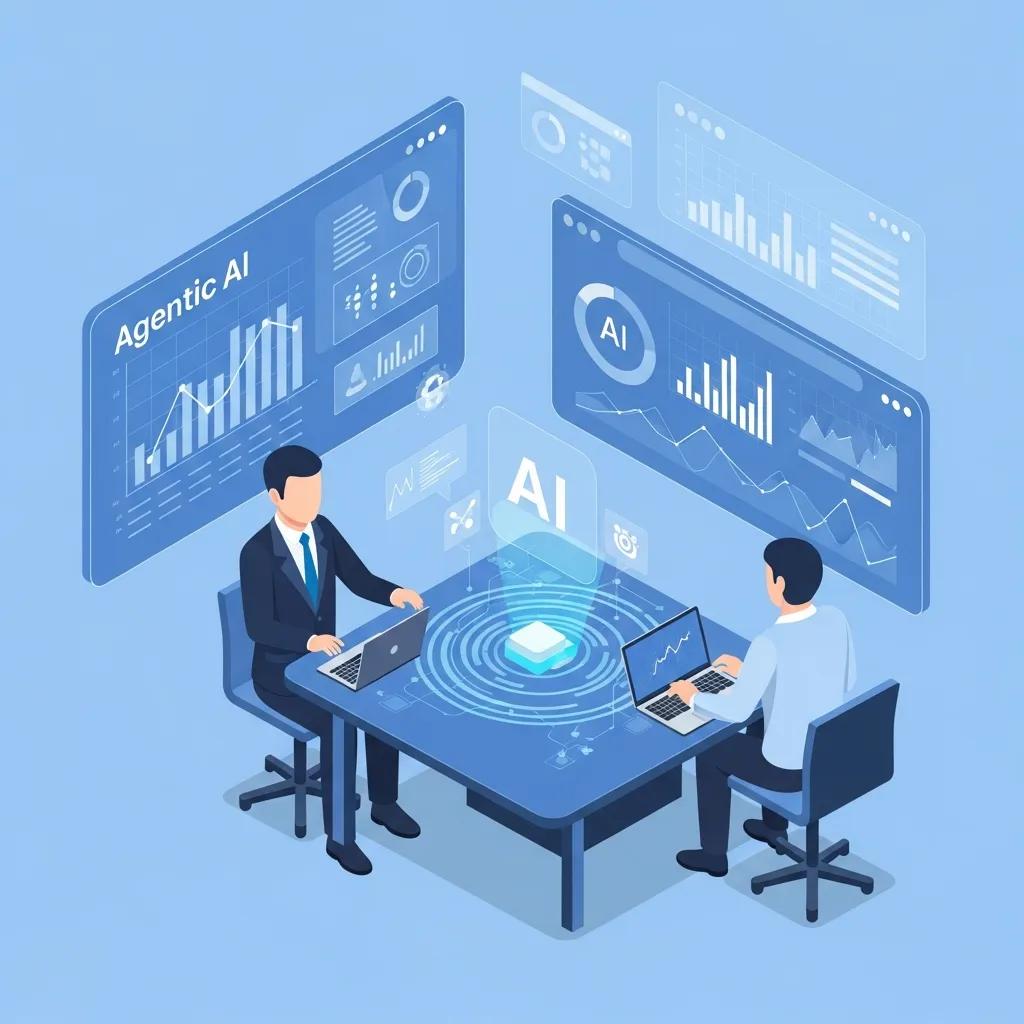
Agentic AI refers to systems that can autonomously plan, act, and learn across multi-step marketing tasks, using objectives and constraints to pursue outcomes without constant manual orchestration. Architecturally, agentic marketing stacks combine planners (strategy generation), executors (automation modules), and feedback collectors (real-time measurement) to close the loop on campaign optimization, enabling faster experimentation and adaptation. Imagine the freedom of rapid multivariate testing, continuous budget allocation toward highest-performing tactics, and significantly reduced operational overhead for repetitive optimizations. But let’s be real, with great power comes great responsibility. We need to watch out for opaque decision paths, potential amplification of biases present in training data, and a crucial need for human-in-the-loop governance to catch any strategy drift. My advice? Agencies and in-house teams should pilot agentic flows on limited objectives—like optimizing creative variants for a single funnel stage—while instituting human checkpoints and rollback controls to manage risk and build trust.

This concept of autonomous systems is further explored by recent research, highlighting the transformative potential and inherent challenges of agentic frameworks.

Agentic AI: Autonomous Systems & Governance in Future AI

Agentic frameworks represent a paradigm shift in artificial intelligence, transitioning from reactive systems to autonomous entities capable of perceiving environments, reasoning about complex situations, planning actions, and executing decisions aligned with specific goals. These architectures integrate multiple specialized components—perception modules, world modeling capabilities, goal management systems, planning mechanisms, and action execution frameworks—working in concert to enable proactive behavior in dynamic environments. While offering transformative potential across domains including robotics, healthcare, finance, and human-AI collaboration, agentic systems simultaneously present significant challenges related to safety, value alignment, interpretability, and governance.

Designing the Mind: How Agentic Frameworks Are Shaping the Future of AI Behavior, 2025

This capability transforms campaign management by shifting teams from manual execution to oversight and strategy, which naturally leads into how personalization at scale complements autonomous execution and improves customer experience.

What Role Does Hyper-Personalization Play in Enhancing Customer Experience?

Hyper-personalization moves beyond simple rule-based personalization to use predictive modeling, session signals, and identity graphs to deliver individualized content and offers in real time, dramatically increasing relevance and conversion. Technically, it relies on your precious first-party data, deterministic and probabilistic identity resolution, feature-rich user profiles, and inference models that score intent and propensity at the very moment of interaction. The payoff? We’re talking measurable lifts in conversion rate, higher retention through improved relevance, and increased average order value driven by context-aware recommendations. To make this happen, you’ll need data pipelines that unify cross-channel behaviors, robust model validation frameworks to avoid overfitting, and orchestration layers that serve dynamic creative and offers without added latency.

My advice? Start small. Pick a single journey—like your welcome series or cart abandonment flow—apply propensity scoring and dynamic creative, and iterate. Let those learnings inform your broader orchestration efforts.

These personalization efforts pair tightly with the tool categories that enable them, which we examine next to help teams select technologies aligned with capability and scale needs.

Which AI Tools Are Revolutionizing Marketing Practices Today?

AI marketing tools fall into several high-level categories—generative AI for content, predictive analytics for propensity and forecasting, automation/orchestration platforms for execution, and real-time personalization engines for session-level decisions. Each of these isn’t just a fancy gadget; it’s a solution to a specific marketing headache and should be selected based on your data readiness, scale, and governance needs.

The comparison below summarizes core categories, primary use-cases, benefits, limitations, and common pricing models to help your team choose wisely.

This table compares leading tool categories by key attributes:

Tool CategoryPrimary Use CaseTypical Benefit
Generative AI PlatformsContent ideation, drafts, localizationFaster content production, variant scaling
Predictive Analytics ToolsPropensity scoring, forecastingImproved targeting accuracy, reduced waste
Automation / Orchestration PlatformsWorkflow execution, multi-channel campaignsShorter time-to-launch, consistent executions
Real-time Personalization EnginesDynamic offers and creative at session levelHigher conversion through context-aware messaging

This comparison shows how each category maps to distinct marketing objectives and technology trade-offs. Selecting the right combination depends on whether your priority is creative scale, predictive precision, execution speed, or session-level relevance.

When choosing tools, evaluate data integration, latency, model transparency, and governance features. After the table, teams should pilot combinations—such as pairing generative content with orchestration platforms—to measure end-to-end impact and iterate toward modular stacks that interoperate.

How Do Generative AI Platforms Enhance Content Creation?

Generative AI platforms accelerate content workflows by producing first drafts, variants, and localized versions that human editors then refine, enabling rapid A/B testing and creative scaling. Typical workflow patterns run like this: you provide a prompt and context, the AI generates a draft, a human editor refines it for brand voice and accuracy, then automated variant creation happens for various channels. This pipeline dramatically reduces cycle time and increases the number of testable hypotheses. The benefits are huge: higher output velocity, consistent templated variants, and the power to personalize language at scale. But let’s be smart about it. We need to be aware of hallucination risks, potential brand-voice drift, and quality variances that necessitate editorial review. For adoption, establish clear guardrails—content validators, style guides, and human QA checkpoints—to retain quality while benefiting from speed, and measure productivity gains and engagement lifts as your primary KPIs.

What Are the Benefits of Predictive Analytics and Automation Tools?

Predictive analytics generate crucial scores such as churn risk, purchase propensity, and lifetime value forecasts. These insights then inform automated triggers and segmentation for targeted campaigns that dramatically increase efficiency and lift. Automation platforms then operationalize these scores into seamless workflows—sending messages, adjusting bids, or allocating budgets—reducing manual intervention and enabling consistent multichannel experiences. The concrete benefits? Think laser-focused targeting, reduced cost per acquisition through better audience selection, and lightning-fast experiment cycles due to automated execution. Measurable outcomes often reported include percentage lifts in conversion rate, reductions in churn rate, and significant time savings in campaign operations. My advice? Start with a single use-case—like churn mitigation—validate model accuracy and business lift via holdout testing, then scale automation to adjacent journeys once the ROI is proven.

These tool categories are core enablers of strategy; the following section maps how businesses should build strategy around data, models, teams, and governance to turn tools into measurable programs.

How Can Businesses Develop Effective AI Marketing Strategies?

An effective AI marketing strategy is layered: you need to prepare your data, validate your models, align your teams, and create governance that preserves trust while enabling experimentation. My recommended approach is simple, yet powerful: assess → pilot → measure → scale. And remember, governance isn’t an afterthought; it’s woven throughout to ensure transparency and compliance. Below is a concise step-by-step plan to convert readiness into a repeatable roadmap that captures low-risk wins and builds operational muscle.

  • Assess Data Readiness: Audit your first-party data quality, identity resolution, and integration points. This is your foundation.
  • Pilot Focused Use-Cases: Choose one high-impact funnel stage for an initial pilot with clear, measurable KPIs. Start small, learn fast.
  • Validate Models: Use holdouts, cross-validation, and fairness checks to confirm predictive performance. Trust, but verify!
  • Operationalize with Automation: Integrate scores into orchestration platforms, always with human checkpoints.
  • Govern and Scale: Establish documentation, audit cadence, and clear escalation paths *before* you scale.

This stepwise plan reduces risk by prioritizing measurable pilots and ensures your teams build repeatable processes that connect model outputs to campaign actions and outcomes.

To make the strategy tangible, the table below maps core strategy components—Data, Models, Teams, Governance—by role, required inputs, and expected outcomes so leaders can allocate responsibilities and set milestones.

Strategy ComponentRequired InputsExpected Outcome
DataUnified first-party profiles, event streamsReliable features and fresher signals
ModelsTraining datasets, validation protocolActionable propensity and segmentation scores
TeamsData engineers, ML analysts, marketersFaster deployment and accountable ownership
GovernanceDocumentation, fairness checks, privacy controlsTransparent and auditable AI deployments

This practical mapping clarifies who does what and what to expect, enabling organizations to operationalize pilots that lead to scalable AI-driven campaigns.

What Are Best Practices for Data-Driven Campaigns and Customer Journey Optimization?

Successful data-driven campaigns start with a rigorous data audit, identity stitching, and feature engineering to ensure your models have high-quality inputs and defensible evaluation criteria. Best practices include maintaining data lineage, clear labeling standards for supervised models, routine drift detection, and using randomized holdouts to validate *business impact* rather than relying solely on model metrics. Segmentation should be dynamic—driven by model outputs and updated frequently—while experimentation frameworks must test both model changes and downstream messaging to truly isolate lift. Your orchestration tools must support versioning of models and fallbacks to manual control when confidence is low. Applying these practices produces repeatable improvements in journey performance and provides the transparency needed for governance and optimization.

How Does Real-Time Engagement Improve Marketing Outcomes?

Real-time engagement uses low-latency inference and contextual signals to serve time-sensitive messages and offers that match momentary intent, significantly improving conversion and customer satisfaction. Typical interventions include dynamic offer serving, session-specific creative swaps, and push/personalized in-app messages triggered by live behavior; these interventions often yield measurable uplifts in conversion rate and engagement metrics. Required technology includes streaming event pipelines, edge inference or low-latency APIs, and orchestration that can apply business rules instantly. Trade-offs include increased system complexity, the need for rigorous monitoring of latency and accuracy, and potential privacy constraints that require careful handling of personal data. When implemented with incremental pilots and clear rollback rules, real-time engagement delivers meaningful short-term lifts and informs longer-term personalization strategies.

What Is the Impact of AI on Marketing Roles and Workforce Dynamics?

Let’s be clear: AI isn’t here to replace us, it’s here to *elevate* us. AI will shift many routine tasks toward automation while creating exciting hybrid roles that combine marketing domain knowledge with data and model fluency, fundamentally changing team structures and hiring priorities. Organizations will move from siloed specialists to dynamic, cross-functional squads that include ML-literate marketers, data engineers, and operations staff for continuous delivery and monitoring of AI-enabled programs. The primary impact is augmentation: repetitive campaign assembly, basic copy variants, and manual optimization will be automated, freeing our talented people to focus on strategy, creative judgment, and governance. Companies should proactively plan for reskilling programs and evolving job descriptions that emphasize data literacy and prompt design. This evolution requires clear role definitions and career pathways to retain talent as responsibilities shift from execution to oversight and strategy.

How Are Marketing Jobs Evolving with AI Integration?

Traditional roles such as campaign managers and copywriters will see aspects of their workflows automated, while exciting new hybrid titles—AI strategist, ML ops for marketing, prompt engineer—emerge to bridge data science and creative strategy. Campaign managers will transition from manual scheduling and tagging to supervising autonomous campaigns and interpreting lift metrics, while creative teams will partner with generative systems to shape narratives and maintain brand voice. Organizational structures will favor cross-disciplinary pods that align model owners, data stewards, and channel leads around product or funnel stages. For leaders, the priority is clarifying responsibility for model outcomes, establishing clear escalation paths for anomalies, and creating training programs that map old tasks to new competencies so teams can transition smoothly and confidently.

What Skills Are Essential for Human-AI Collaboration in Marketing?

Successful human-AI collaboration depends on a powerful mix of technical and soft skills: data literacy to interpret model outputs, prompt design to elicit high-quality generative outputs, model interpretation to diagnose biases and performance, and strong ethics/compliance awareness to ensure responsible use. Recommended training approaches include on-the-job rotations, focused workshops on model evaluation, and external courses for ML fundamentals that emphasize applied marketing use-cases. Additionally, communication and change-management skills are absolutely vital to help teams translate technical findings into strategic actions and maintain stakeholder alignment. Building these competencies empowers your teams to supervise autonomous systems effectively and derive sustained business value from your AI investments.

What Ethical Considerations Must Marketers Address When Using AI?

When we talk about AI, we *must* talk about ethics. It’s not just about compliance; it’s about building and maintaining the trust of our customers. Ethical AI in marketing covers algorithmic bias, data privacy, transparency, and accountability; addressing these topics proactively preserves customer trust and significantly reduces regulatory risk. Marketers must implement privacy-by-design practices, conduct regular bias audits, and offer explainability for decisions that materially affect customers. Practical mitigation strategies include using diverse training datasets, embedding fairness metrics in evaluation pipelines, and employing differential privacy or anonymization where appropriate. Governance should mandate clear documentation of model purpose, data sources, and performance thresholds, along with a clear process for human review of automated decisions. These steps ensure AI-driven personalization and automation are both effective and, crucially, responsible.

How Can Algorithmic Bias and Data Privacy Be Mitigated Responsibly?

Mitigating bias requires a combination of careful dataset curation, model-level fairness constraints, and routine third-party or internal audits that measure disparate impacts across segments. Techniques include oversampling underrepresented groups where appropriate, implementing fairness-aware loss functions, and monitoring post-deployment outcomes for unequal performance. For privacy, adopt privacy-preserving methods such as differential privacy, secure multiparty computation where feasible, and strict minimization of collected personal data in line with legal requirements. Documentation and consent management must be rigorous, with clear policies for data retention and user data requests. These technical and organizational controls reduce the risk of harm and sustain consumer trust, which is absolutely essential for scaling AI-driven personalization.

What Guidelines Support Transparent and Ethical AI Deployment?

Operational guidelines for transparent AI deployment include maintaining “model cards” that clearly describe purpose and limitations, requiring human-in-the-loop approval for high-impact decisions, and scheduling regular fairness and performance reporting. Recommended governance roles include a data steward, an ML ops lead, and an ethics reviewer with defined reporting cadences and audit trails. Transparency measures can extend to consumer-facing explanations when algorithmic decisions materially affect users, and to independent audits for high-risk systems. Implementing these practices creates an auditable path from data to decision, which enhances accountability and supports compliant scaling of AI capabilities.

How Is ROI Measured for AI Marketing Initiatives?

Measuring the ROI of your AI marketing isn’t just about numbers; it’s about proving the tangible value of your innovation. It requires combining model performance metrics with business KPIs, using smart experimental designs to isolate lift, and selecting attribution approaches that truly reflect the role of AI-driven interventions. Core KPIs include model-level metrics (precision, recall, calibration), campaign metrics (conversion rate, engagement), and economic measures (CAC, LTV, incremental revenue). Attribution methods range from experimental holdouts to algorithmic multi-touch models; selecting the right approach depends on data granularity and the degree to which AI influences the conversion pathway. My advice? Define your success criteria *before* deployment, use controlled experiments where practical, and report both short-term and long-term impacts to capture the full ROI picture.

The table below maps KPIs and attribution choices to common AI use-cases so teams can align measurement plans with business objectives.

Measurement FocusExample KPIUse-Case Mapping
Model PerformancePrecision / RecallPersonalization and propensity models
Campaign ImpactConversion Rate LiftGenerative content and creative tests
Economic OutcomeCAC, LTV, Incremental RevenueAutomation and budget allocation changes

What Key Performance Indicators Track AI Marketing Success?

Track a balanced set of KPIs: model diagnostics (AUC, precision, recall), system metrics (latency, uptime), and business metrics (CVR, retention, LTV) that reflect the customer journey stage influenced by AI. Monitoring cadence should be frequent for model health (daily to weekly) and business KPIs on a weekly to monthly basis depending on volume. Establish clear thresholds for alerts—such as drops in precision or unexpected shifts in demographic performance—to trigger human review and rollbacks if necessary. Combining operational and business metrics ensures your teams detect both technical drift and changes in downstream outcomes that affect your ROI.

How Do Attribution Models Evaluate AI-Driven Campaign Effectiveness?

Attribution choices include last-click for simple reporting, multi-touch models to distribute credit across touchpoints, algorithmic attribution that infers contribution weights, and experimental designs (holdouts, A/B tests) that provide causal estimates of lift. Experiments—such as randomized holdouts—are the gold standard for validating AI-driven interventions because they isolate incremental impact; algorithmic attribution is useful when experiments are infeasible but requires careful validation. Strengths and weaknesses: last-click is simple but biased, multi-touch is descriptive but may misallocate credit, and experiments provide causality but can be operationally complex. My recommendation? Use experiments where possible for new AI initiatives, and complement attribution models with periodic holdout validation to maintain confidence in measured ROI.

This measurement mix enables organizations to quantify the value of AI investments and iterate on strategy based on validated outcomes.

Ready to Transform Your Marketing with AI?

The future of marketing is here, and it’s powered by AI. From autonomous campaigns to hyper-personalization, the opportunities to drive measurable growth and create unforgettable customer experiences are immense. But navigating this landscape requires a clear strategy, the right tools, and a human-centric approach to ethics and team evolution. Don’t just watch the future unfold—be a part of shaping it for your business.

Frequently Asked Questions

What are the potential risks associated with using AI in marketing?

While AI offers numerous benefits in marketing, it also presents risks such as algorithmic bias, data privacy concerns, and the potential for opaque decision-making. These risks can lead to unintended consequences, such as reinforcing stereotypes or violating consumer trust. As marketers, we must implement robust governance frameworks, conduct regular audits, and ensure transparency in AI processes to mitigate these risks. Additionally, having a human-in-the-loop approach is crucial to catch errors and maintain ethical standards in our AI-driven campaigns.

How can businesses ensure ethical AI practices in their marketing strategies?

To ensure ethical AI practices, businesses should adopt a framework that includes bias audits, transparency measures, and privacy-preserving techniques. This means using diverse datasets for training, implementing fairness metrics, and maintaining clear documentation of AI systems. Regular training for our teams on ethical considerations and compliance is also essential. By prioritizing these ethical guidelines, we can build consumer trust and avoid regulatory pitfalls while leveraging AI for marketing effectiveness.

What skills will be most valuable for marketers in an AI-driven landscape?

In an AI-driven marketing landscape, skills such as data literacy, model interpretation, and prompt design will be absolutely crucial. Marketers will need to understand how to analyze AI outputs, design effective prompts for generative models, and ensure compliance with ethical standards. Additionally, strong communication and change management skills will help our teams translate technical insights into actionable strategies. Continuous learning and adaptation will be key as the marketing field evolves with AI technologies.

How can companies measure the success of their AI marketing initiatives?

Measuring the success of AI marketing initiatives involves tracking a combination of model performance metrics, campaign effectiveness, and economic outcomes. Key performance indicators (KPIs) such as conversion rates, customer acquisition costs, and lifetime value should be monitored alongside model diagnostics like precision and recall. Employing experimental designs, such as A/B testing, can help isolate the true impact of AI interventions. This comprehensive approach allows businesses to assess the real value of their AI investments and refine their strategies accordingly.

What are the best practices for implementing AI tools in marketing?

Best practices for implementing AI tools in marketing include starting with a clear understanding of your data readiness, selecting appropriate use cases, and piloting initiatives before scaling. Organizations should ensure robust data integration and establish governance frameworks to maintain transparency and compliance. Regularly validating models and monitoring performance metrics is essential for optimizing AI-driven campaigns. Additionally, fostering cross-functional collaboration among teams can significantly enhance the effectiveness of AI tools and lead to better marketing outcomes.

How does real-time engagement impact customer interactions?

Real-time engagement significantly enhances customer interactions by delivering timely, contextually relevant messages and offers. This approach leverages low-latency data processing to respond to customer behavior instantly, improving conversion rates and overall satisfaction. For example, dynamic offers can be presented based on a customer’s current actions, leading to a more personalized experience. However, implementing real-time engagement requires sophisticated technology and careful monitoring to ensure accuracy and compliance with privacy regulations.

What future trends should marketers watch for in AI technology?

Marketers should keep a keen eye on several emerging trends in AI technology, including the rise of agentic AI, which enables autonomous campaign management, and hyper-personalization, which tailors experiences in real-time. Additionally, advancements in multimodal AI content creation and real-time decision-making will further enhance marketing strategies. Ethical AI practices and transparency will also become increasingly important as regulations evolve. Staying informed about these trends will help us marketers leverage AI effectively and responsibly in our campaigns.

Written By Christina Blackmon

Written by Christina Rae Blackmon, Founder & CEO of Momentive Media. With a passion for conscious marketing, Christina leads with empathy and creativity, guiding businesses towards impactful growth.

Explore More Insights

The Launch Doesn’t Have to Break You: Marketing in Flow

The Launch Doesn’t Have to Break You: Marketing in Flow

What I learned when I stopped building at full speed and started building with the current I've been watching something for a while now. I've watched creators I admire — people building real, meaningful things — do it in a way that used to confuse me. They'd announce...

read more

0 Comments

Submit a Comment