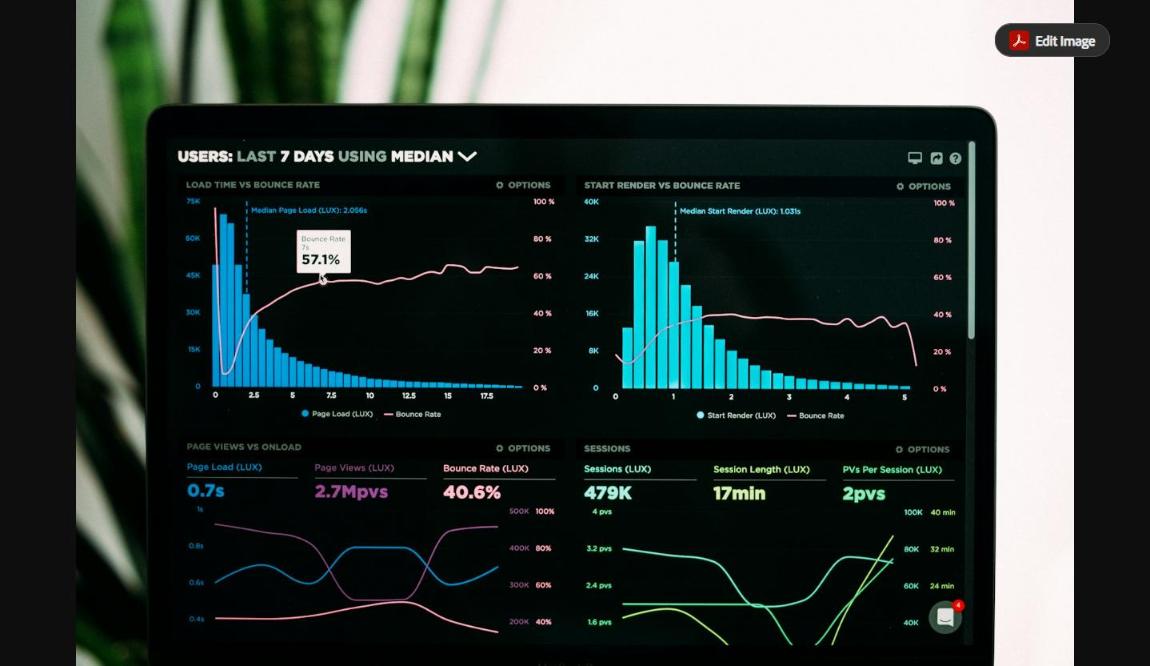
If you’re tracking a single aggregate metric to measure your brand’s visibility across generative search, you’re likely looking at a vanity number that obscures more than it reveals. There’s a persistent temptation to treat the “AI ecosystem” as a monolith, but treating ChatGPT, Gemini, and Perplexity as a single channel is a tactical error that leads to wasted resources.
In my own work, most marketing teams are still tracking visibility through a single, engine-agnostic lens — one dashboard, one score, one number. That’s functionally equivalent to treating a newspaper, a television broadcast, and a billboard as the same advertising medium because they all “deliver information.”
The engine is the filter, and the filter is never neutral. When you optimize for a generic “AI visibility” score, you’re optimizing for a ghost.
The Problem of Low Source Overlap
The evidence backs this up. Ahrefs’ 75,000-brand study found AI Overview visibility correlates far more with branded web mentions (0.664) than with Domain Rating (0.326) or raw backlinks (0.218) — different engines are reading different signals, not the same signal at different volumes. And seoClarity’s analysis of 362,000 AI Overviews found 44% of citations came from URLs outside the top 20 organic results entirely. What ranks as a primary source for one engine’s answer may be ignored by another’s.
By averaging these disparate outcomes into a single visibility score, you lose the signal. You can’t improve what you can’t distinguish. If your visibility drops, is it because your content lost relevance, or because one specific engine updated its citation behavior while the others held steady? An aggregate score won’t tell you.
The Gap Between Engines Isn’t Small
Here’s what that fragmentation actually looks like when you put two engines side by side. Ahrefs ran 3,311 classic, head-term keywords through ChatGPT, Perplexity, and Google’s top 100 results. Only 10% of ChatGPT’s cited URLs showed up anywhere in Google’s top 10 for the same query, and 79% of ChatGPT’s citations didn’t appear in Google’s top 100 results at all. Perplexity told nearly the opposite story: 65% of its citations matched Google’s top 10, making it the one AI engine that still behaves something like a traditional search engine.
That’s not statistical noise — it’s two systems built on different retrieval logic, both marketed as “AI search,” both getting flattened into whatever single visibility number a dashboard hands you. A brand that looks strong in Perplexity because it ranks well organically can look nearly invisible in ChatGPT, which pulls from a far wider, less rank-correlated pool of sources. Blend those two outcomes into one score and you lose the ability to tell which engine moved, or why.
Moving Toward Distributed Measurement
We need to stop asking “how visible are we in AI?” and start asking “which models prioritize our primary domain, and why?” Test engines independently. Track citation frequency by model. Accept that your authority will look fragmented, because it is. If that sounds more difficult and less tidy than a single score — that’s because it’s honest.
Frequently Asked Questions
Why can’t I just track one AI visibility score?
Because ChatGPT, Gemini, Google’s AI Overviews, and Perplexity each pull from different source pools and weight different signals — a single blended score averages away exactly the differences you’d need to act on.
What does the research say actually drives AI Overview visibility?
Ahrefs’ study of 75,000 brands found branded web mentions correlate with AI Overview visibility at 0.664, versus 0.326 for Domain Rating and 0.218 for raw backlink count — mentions matter roughly twice as much as the link-based metrics.
How much do AI Overview citations actually overlap with top Google rankings?
Per seoClarity’s analysis of 362,000 AI Overviews, 44% of citations came from URLs outside the top 20 organic results entirely — so ranking well helps, but it isn’t the whole story.
How different are ChatGPT and Perplexity, really?
Very. In Ahrefs’ side-by-side study of 3,311 keywords, only 10% of ChatGPT’s citations overlapped Google’s top 10, versus 65% for Perplexity. They’re not two flavors of the same engine — they’re reading the web differently.
What should I measure instead of one aggregate score?
Track citations, mentions, and recommendations separately, by engine. Run the same query across ChatGPT, Gemini, and AI Overviews and note where you show up and where you don’t — that tells you which engine’s signal you’re actually missing, not just whether one blended number moved.



0 Comments